


Garage floor coating cost: factors, options, and a smart budgeting checklist
If you’re researching garage floor coating cost, you’re likely trying to balance durability, appearance, and budget—without paying for extras you don’t need. While every project is unique, the main cost drivers are consistent. This article maps those drivers, explains how different choices change the bottom line, and gives you a step-by-step way to request and compare quotes confidently. No prices here—just a clear framework you can apply to any proposal.
Understanding scope and measurement
Before discussing products and finishes, define the basics of your space. Clear scope reduces assumptions (and change orders) later.
- Square footage: Measure length × width for each bay. Include steps, landings, or storage alcoves if they will be coated.
- Obstacles: Note posts, built-in benches, drains, and door thresholds. More edges and cut-ins mean more time and materials.
- Access and clearance: Confirm how cars, appliances, and storage will be moved. Limited access can extend labor time.
- Existing coating or sealer: Identify paint, epoxy, acrylic sealer, or adhesive residues that may require removal.
- Moisture and drainage: Check for damp spots, white mineral deposits (efflorescence), or ponding near the garage door.
Why it matters for garage floor coating cost: square footage determines baseline material and labor, while obstacles, removal needs, and moisture mitigation add steps that influence both time and consumables.
Material options and what they impact
Coating systems vary by chemistry, thickness, and decorative elements. Your choices here influence appearance, texture, chemical resistance, and service life—all of which affect total cost.
- Primer/bond coats: Improve adhesion and help lock in porosity. Some slabs benefit from specialized primers, especially if moisture transmission is a concern.
- High-build body coats: Often based on industrial-grade resins formulated for strength and stain resistance. Thickness and solids content affect coverage rates.
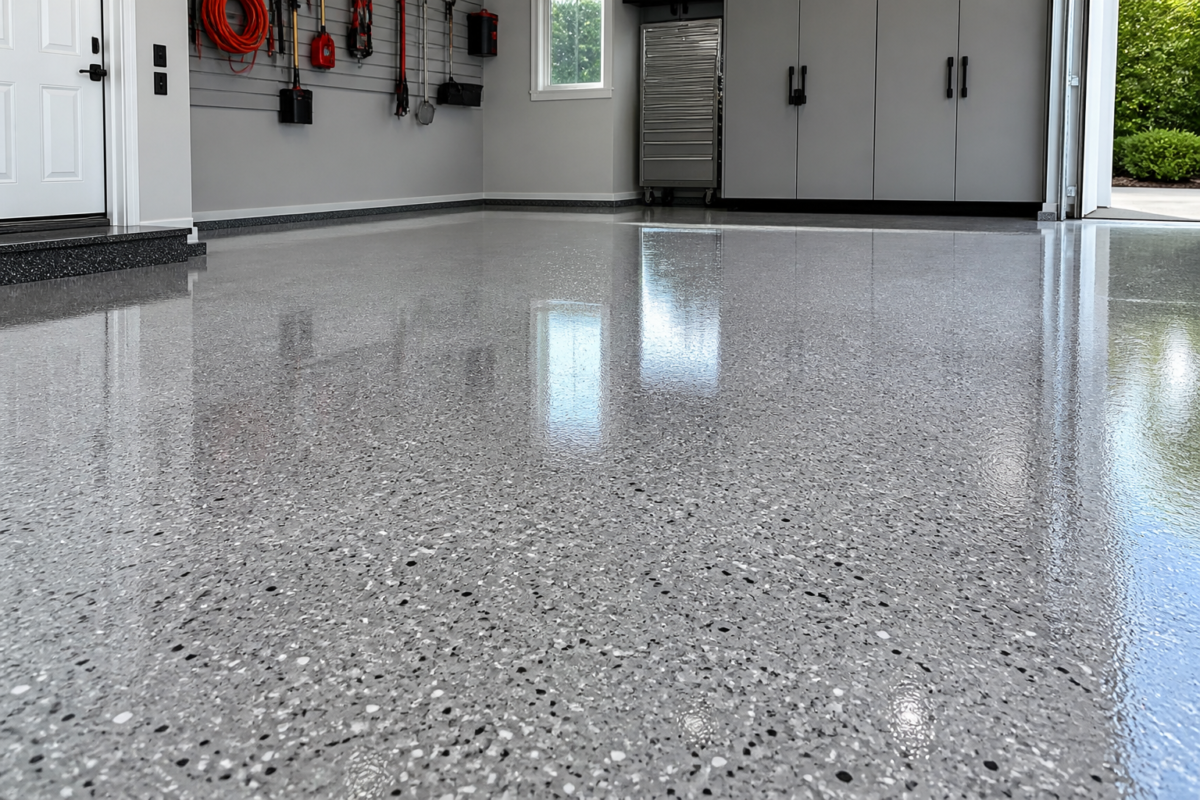
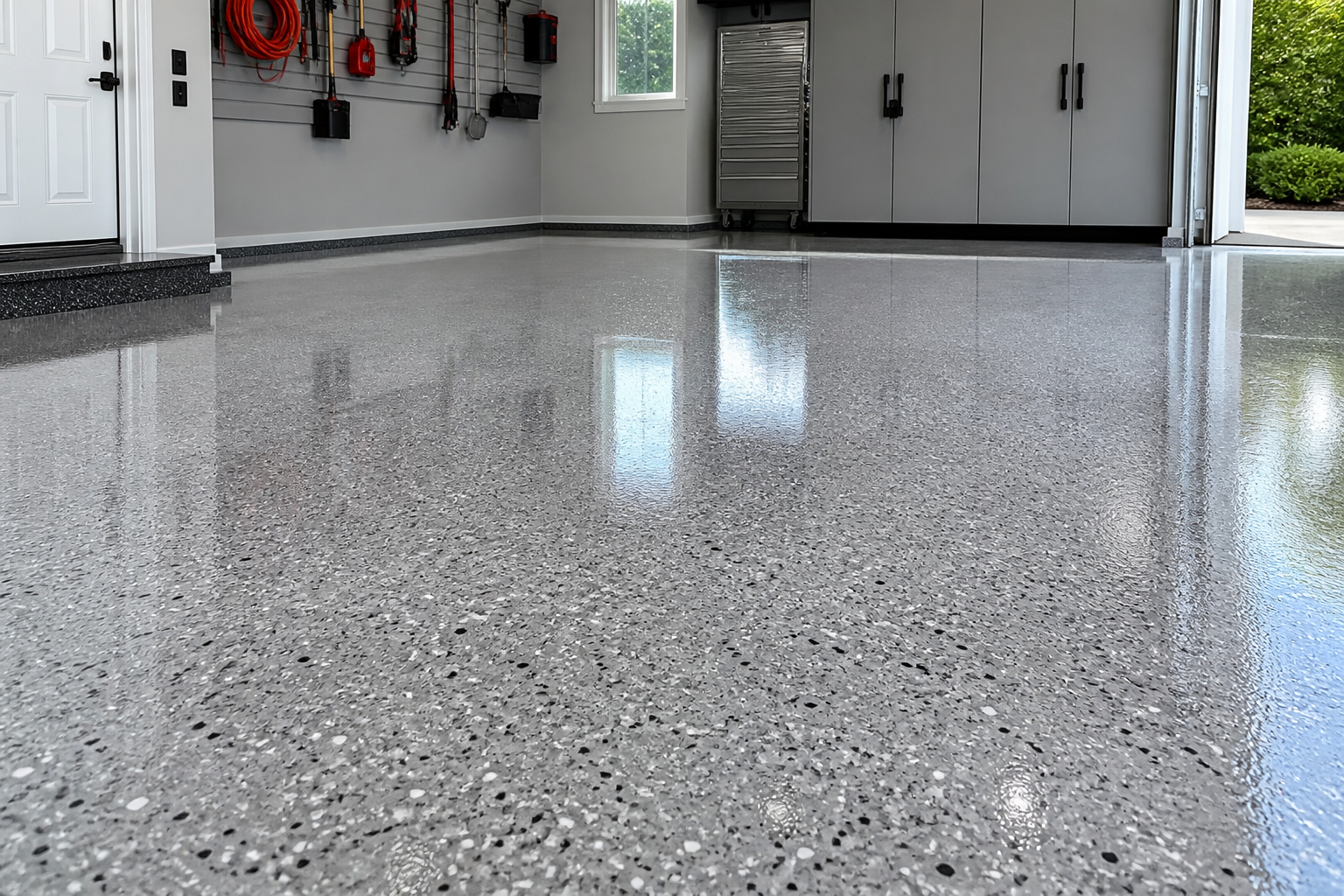
- Decorative flakes (broadcast): Add color depth, hide minor imperfections, and improve traction. Heavier broadcasts use more chips and clear coats.
- Metallic effects: Create marbled, flowing visuals. They demand careful application technique and often additional clear coats to protect the finish.
- Clear topcoats: Provide gloss, UV stability, and abrasion/chemical resistance. Number of coats and topcoat chemistry influence longevity and maintenance needs.
Consider how you use the garage. Frequent automotive work, road salts, hot-tire pickup, spills, or heavy rolling loads benefit from tougher systems and additional topcoats. Decorative preferences—like full flake coverage or metallic effects—raise materials and time, which reflects in garage floor coating cost.
Preparation levels and hidden variables
Prep determines how well the system bonds and performs. Even the best coating struggles if the substrate isn’t right. Prep scope can range from simple cleaning to multi-step correction.
- Cleaning and degreasing: Removes oils, silicones, and contaminants that cause fisheyes or adhesion loss.
- Mechanical profiling: Methods like diamond grinding open the concrete surface so coatings can key in. Profile depth is matched to the coating system.
- Crack and spall repair: Structural cracks, pitting, expansion-joint issues, and chipped edges may require specialized fillers or rebuilds.
- Leveling and feathering: Addressing dips or high spots improves both appearance and wash-down performance.
- Moisture mitigation: High vapor transmission can push coatings off. Depending on readings, additional measures may be specified.
Why it matters: Prep is labor- and tooling-intensive. Substrate conditions discovered during evaluation can change the plan, which in turn affects garage floor coating cost. A thorough site assessment and a written prep scope reduce surprises.
Labor, timing, and project complexity
Labor isn’t just about hours; it’s about sequencing, cure windows, and coordination with your schedule.
- Number of coats and cure times: More coats and longer recoat windows extend the project timeline.
- Climate and temperature: Extreme heat, cold, or humidity influences working time and cure, which can affect scheduling and return-to-service.
- Occupied home logistics: Clearing the garage, covering adjacent areas, and working around household needs can add coordination steps.
- Edge details: Stairs, stem walls, and base cove elements require careful masking and handwork.
- Quality control steps: Adhesion testing or moisture readings before application help prevent failures but add time.
These variables impact the duration and staffing of the job, which directly relates to overall garage floor coating cost.
Add-ons and upgrades to consider
Enhancements can personalize function and appearance. Each adds materials and steps, so include them in the initial quote rather than after the fact.
- Full flake broadcast vs. partial: Full broadcasts offer a more uniform look and traction; partial is subtler and uses fewer materials.
- Anti-slip media: Clear aggregates or fine-texture additives improve wet traction, helpful in winter climates or wash bays.
- UV-stable topcoats: Maintain color and gloss under sunlight; more critical for garages with south-facing doors or frequent door-open time.
- Integrated cove base: A curved transition from floor to wall improves cleanability and helps contain spills.
- Color-matched stem walls and steps: Extends the finished look up the sides and on stair treads.
- Logo inlays or striping: Custom elements that require layout and additional clear coats.
Ways to control and compare costs
You can’t manage what you can’t compare. Use this checklist to make quotes apples-to-apples:
- Specify measured square footage and which areas are included (floor, steps, stem walls, landings).
- Request the exact prep method (for example, diamond grinding) and any moisture or adhesion testing.
- List known repairs: cracks, pitting, spalls, and who is responsible for identifying hidden issues after grinding.
- Define the system build: primer type, number of body coats, decorative flake coverage (partial vs. full), metallic effects if any, number and type of clear topcoats, and anti-slip media.
- Clarify cure and return-to-service timelines for foot traffic, light loads, and vehicles.
- Confirm edge details: saw cuts, control joints, expansion joints—fill, honor, or coat over as specified.
- Note protection steps for adjacent finishes and who moves appliances, shelving, or vehicles.
- Ask what is excluded: unforeseen slab issues, moisture mitigation, or disposal fees.
- Get a written schedule window and a single point of contact for updates.
- Request product data sheets so you can understand performance characteristics.
By standardizing your request, you’ll see how different providers handle the same scope, helping you weigh value rather than just headline numbers when considering garage floor coating cost.
Red flags and common pitfalls
- Minimal or no mechanical prep: Skipping proper profiling invites adhesion problems.
- Vague system description: “Two coats” without identifying materials or coverage rates is hard to compare.
- Ignoring moisture: Damp slabs can cause blistering or delamination if not addressed.
- Unclear joint treatment: Filling active joints without a plan can lead to cracking along those lines.
- Rushing cure times: Driving on the floor too early can imprint or mark the surface.
- Insufficient slip resistance: Smooth, glossy floors can be slick when wet if no anti-slip media is used.
Maintenance and longevity factors
Long-term value depends on matching the coating’s performance to your usage and maintaining it appropriately.
- Cleaning routine: pH-neutral cleaners and soft bristle tools maintain gloss and reduce wear.
- Grit control: Mats at entries and under work areas help protect against abrasion.
- Chemical exposure: Wipe up oils, solvents, and brake fluid promptly; prolonged exposure can affect appearance.
- Seasonal considerations: Road salts and studded tires increase abrasion—topcoat selection and anti-slip media matter.
- Touch-ups and reseals: High-traffic areas may benefit from periodic clear-coat maintenance depending on use.
Planning for care up front helps you evaluate not only initial garage floor coating cost but also the total cost of ownership.
Sample estimating framework (without prices)
Use this structure to gather or organize proposals. Replace placeholders with each contractor’s written details.
- Project scope: [X] sq. ft. main floor, [Y] sq. ft. steps/stem walls; obstacles: [list].
- Prep plan: Mechanical profile method [e.g., diamond grinding]; cleaning/degreasing; crack/spall repair approach; moisture evaluation procedure.
- System build: Primer [type]; body coat(s) [resin type, solids, coverage]; decorative layer [flake % coverage or metallic]; topcoats [count, chemistry, slip media].
- Edges and joints: Treatment for control/expansion joints; base cove or stem-wall coating details.
- Schedule: Day 1 prep, Day 2 body coat(s), Day 3 topcoat(s), return-to-service times for foot/vehicle traffic.
- Inclusions: Material handling, masking, cleanup, disposal; moving appliances (yes/no), shelving (yes/no).
- Exclusions/allowances: Moisture mitigation, extensive slab repair beyond visible cracks, unforeseen substrate issues.
- Documentation: Product data sheets; maintenance instructions provided at closeout.
When each bid follows a similar outline, you can better interpret differences that influence garage floor coating cost—such as extra topcoats, heavier flake coverage, or expanded crack repair.
FAQ
What affects garage floor coating cost the most?
Square footage, substrate condition (and the prep required), the coating system build (primer, body coats, decorative elements, and topcoats), and scheduling/return-to-service requirements are typically the biggest drivers. Add-ons like full flake broadcasts, anti-slip media, cove base, or metallic effects also add materials and time.
How can I avoid surprise charges after work begins?
Ask for a written prep scope; identify known cracks and spalls; require clarity on moisture testing and joint treatment; and request all materials and coat counts be listed by name. Confirm exclusions, such as moisture mitigation or extensive slab repairs, so you know what would trigger a change order.
Do I really need a mechanical profile like grinding?
Proper mechanical profiling helps coatings bond to concrete. Smooth or sealed slabs, or floors with contaminants, often need grinding to achieve a suitable surface profile. Skipping it can lead to premature failure, which is more expensive to correct than doing adequate prep from the start.
How should I plan the timing around vehicles and storage?
Build in time to empty the garage, then consider cure windows for foot traffic, light loads, and vehicles. Many systems require staged returns to service—confirm exact timelines in writing so you can plan alternative parking and storage.
What finish is best for traction and easy cleaning?
Full flake broadcasts with a suitable clear topcoat can offer texture for traction while remaining cleanable. Anti-slip media can be added to topcoats for extra grip. The right balance depends on your climate, how wet the floor may get, and your preference for gloss versus texture.
