




How to choose flat ceiling paint
Flat ceiling paint, sometimes sold as ultra-flat or ceiling paint, is formulated to reduce glare and mask small surface flaws on overhead surfaces. Manufacturers and retailers note that ceiling-specific formulas prioritise hide and uniformity rather than washability, which makes them a common choice for living rooms, bedrooms, and other low-traffic areas where a non-reflective finish is desired. For a practical overview of ceiling selection and technique, see the Home Depot ceiling painting guide for step-by-step tips and their notes on ceiling paint characteristics.
Top five features to prioritise when buying flat ceiling paint
1. Choose a ceiling-specific formula and anti-splatter mix
Look for products labelled as ceiling paint or ultra-flat ceiling finish because these are slightly thicker, which reduces roll splatter when working overhead. Retail and trade guides recommend ceiling formulas for ease of application and better hide; a ceiling-specific product will often say so on the can. If you plan to roll overhead, asking for a ceiling variant at the store is a quick check that the formula was designed for that use.
2. Prioritise hide and coverage rating
Ceilings display shadows and uneven light, so a high-hide formulation matters more here than on walls. Check the spec sheet for stated coverage per litre and any marketing claims about “high hide” or “one coat hide.” Brands often provide coverage figures on the technical data sheet, and expert guides highlight that a high-hide ceiling paint will mask minor repairs and discolouration better than a standard wall paint. If you are covering stains or nicotine residue, plan to pair the paint with a stain-blocking primer.
3. Pick low-odor or ZERO VOC options for occupied homes
If the space will be occupied while you work, or if household members have sensitivities, choose low-odor or ZERO VOC interior ceiling paint. Home Painter Services lists ZERO VOC interior paints among their service offerings for families that want lower-odor projects, and manufacturers and retailers now commonly provide low-VOC ceiling paints for indoor use. ZERO VOC choices reduce strong smells during and after application, although no paint can eliminate all indoor-air considerations, so ensure ventilation during and after the job.
4. Confirm primer compatibility and stain-blocking
Flat ceiling paints focus on hide rather than stain resistance, so confirm whether the product requires or includes primer for problem spots. For water stains, smoke, or heavy patching, a dedicated stain-blocking primer or an all-in-one paint-and-primer is the right approach. Professional and retailer guidance stresses that primer is essential when substrate problems exist, and that a primer will improve adhesion and long-term appearance, especially on textured or patched surfaces.
5. Consider touch-up strategy and realistic durability
Flat finishes hide flaws but are generally less washable than low-sheen or satin finishes. If you expect frequent cleaning of the ceiling or rough use nearby, consider whether a low-sheen alternative might be better. Manufacturers such as Benjamin Moore and Behr explain that flat paints are best for very low-traffic areas, while eggshell and satin sheens provide better durability where cleaning is needed. Accept the tradeoff for ceilings, and plan for touch-up paint in the same batch to match texture and sheen later.
How flat paint behaves on different ceiling surfaces
Smooth drywall: the easiest case
On a well-prepared drywall ceiling, flat ceiling paint will give an even, non-reflective finish and hide minor imperfections. For new drywall, ensure taping and mudding are sanded and primed before painting. Following standard preparation practices will yield the best result with a ceiling paint designed for hide and coverage.
Stucco and textured ceilings: test for seal and adhesion
Textured and stucco ceilings may need sealing before painting. Some textured substrates are porous or unsealed, which can affect how much paint they absorb and how well a flat formula will lay in. Retailer guidance recommends testing a small area to confirm adhesion and coverage, and sealing the surface if the texture is very absorbent. If you are unsure whether your textured ceiling is sealed, treat it as a surface that needs primer and follow the manufacturer directions for textured ceilings.
Popcorn ceilings: hide versus removal
Popcorn ceilings present a special case. While a flat ceiling paint can temporarily mask the look and even out colour, the textured finish will still show. For a truly smooth, modern ceiling, professionals often remove the popcorn texture, then apply a skim coat before painting. Home Painter Services offers popcorn ceiling removal followed by skim coat and paint, which is the common professional workflow when clients want a smooth flat finish rather than preserved texture.
Application and tool tips that change the outcome
Roller nap and anti-splatter formulas
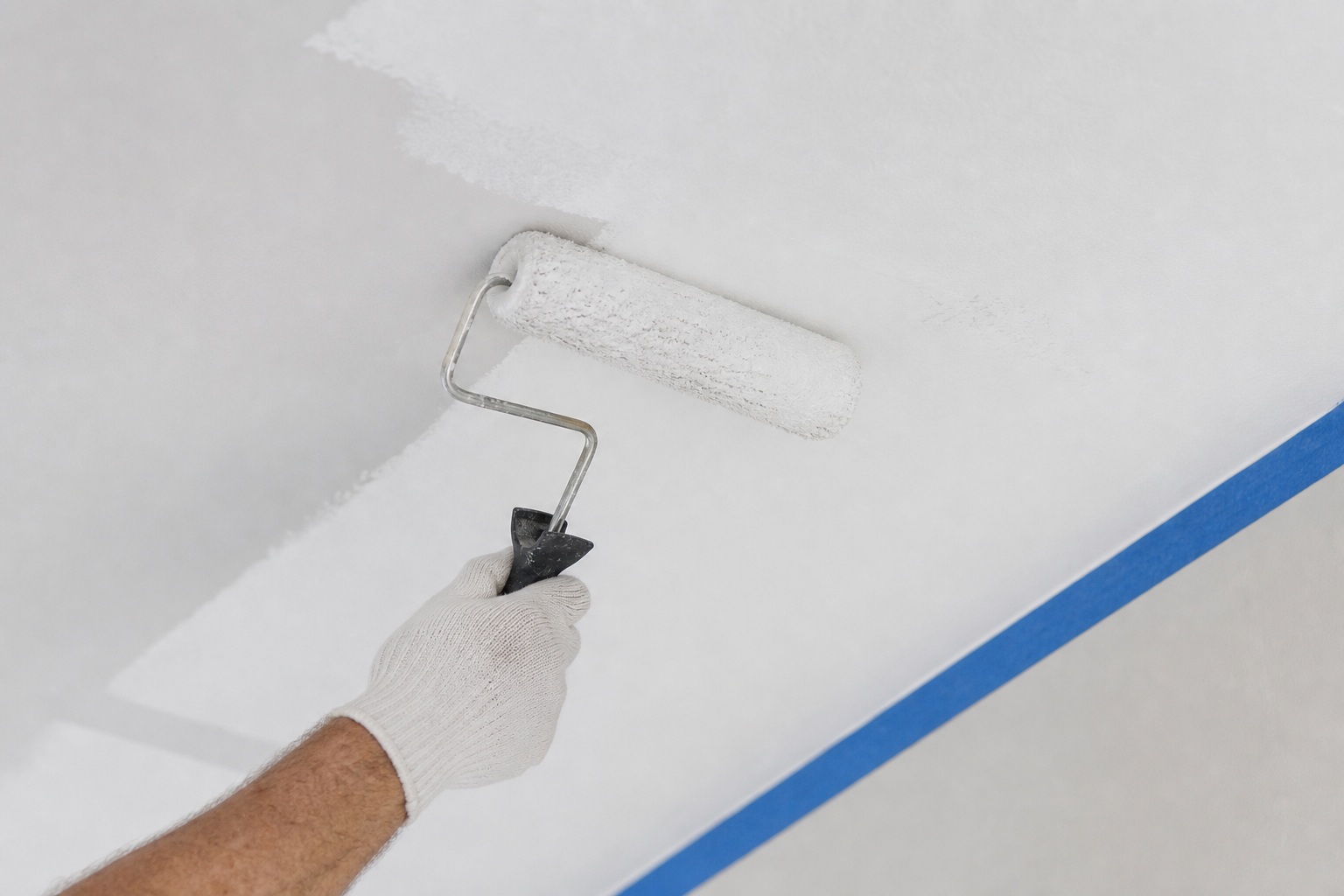
Use a medium to thick roller nap when painting ceilings to hold enough paint and avoid excessive splatter. Ceiling-specific paints tend to be slightly thicker and pair well with a 10 to 12 mm nap on smooth ceilings, and a deeper nap for textured surfaces. Matching roller nap to the ceiling texture reduces splatter and improves uniformity.
Primer and patching before painting
Always prime patched areas and stains before applying the flat finish. Primer evens out porosity, seals repairs, and prevents stains from bleeding through. For water stains or smoke damage, use a stain-blocking primer and follow the manufacturer instructions for drying and topcoat timing.
Ventilation and low-odor choices
Open windows and run fans to move air while painting. Low-odor and ZERO VOC ceiling paints reduce unpleasant smells, which is especially useful in occupied homes or where household members are sensitive to odours. That said, maintain good ventilation until the paint off-gases and the room air feels normal again.
Tradeoffs, common objections, and decision criteria
Homeowners often worry that flat paint is hard to clean, that ZERO VOC is insufficient for safety, or that flat finishes will never hide major defects. Keep these points in mind.
- Cleaning, flat sheens are less washable than eggshell and satin, so avoid flat where frequent scrubbing is likely, and prefer a low-sheen alternative in high-moisture rooms.
- VOCs, ZERO VOC paints lower odour and chemical exposure compared with older solvent-based options, but proper ventilation remains important during and after painting.
- Hide limits, flat paint masks small flaws very well, but it will not replace proper repair of cracks, severe staining, or structural issues. Use primer and repairs first.
Decide based on room function, traffic, likelihood of stains, and the priority to hide imperfections. For living rooms and bedrooms, flat ceiling paint is often the best choice. For kitchens, bathrooms, or areas beneath vents, consider a more durable low-sheen finish.
When to hire a professional in Mississauga and what to expect

If your ceiling requires popcorn removal, large repairs, extensive skim coating, or you want minimal disruption in an occupied home, hire a professional. A qualified contractor should provide an on-site estimate, clear scope for surface preparation, protection for furniture and floors, priming recommendations, and a timeline. Home Painter Services advertises Free Color Consultation and Free Estimate Visits, ZERO VOC interior paint options, popcorn ceiling removal with skim coat and paint, and a Guaranteed On-Time Completion promise as part of their residential services. If you prefer to avoid the physical strain of ceiling work or require skillful feathering and texture matching, a pro will also deliver smoother results and manage cleanup.
Quick buying checklist and how to brief your painter
- Confirm the label says “ceiling” or “ultra-flat”.
- Ask if the product is an anti-splatter or thicker ceiling formula for overhead rolling.
- Check coverage per litre and look for “high hide” claims on the technical sheet.
- Specify ZERO VOC or low-odor if occupants are sensitive.
- Require primer for stains, smoke, or textured substrates.
- If removing popcorn, specify removal plus skim coat and retexture or smooth finish.
- Ask the contractor for a written timeline, surface-prep plan, and confirmation of furniture and floor protection.
Sample brief to a contractor: “I want a smooth, non-reflective ceiling finish. Please include inspection, popcorn removal if needed, all patching and skim coating, stain-blocking primer where required, a ceiling-specific ultra-flat finish in a ZERO VOC option, and full protection for furniture and floors. Provide an on-time completion promise and a matching touch-up pot.” Use this brief to compare quotes and confirm scope.
Frequently asked questions
Is flat paint the best choice for all ceilings?
Not always. Flat paint is ideal for low-traffic ceilings where hiding imperfections and minimising glare are priorities. For ceilings in kitchens or bathrooms where cleaning is more frequent, a low-sheen alternative will be more durable. Manufacturer guides outline these sheen tradeoffs and recommend flat for most interior ceilings but a different sheen where washability matters.
Can I use flat ceiling paint in a bathroom or kitchen with moisture?
Flat paint resists reflection and hides flaws, but it is not the best choice for high-moisture areas because it is less washable and may stain. For bathrooms and kitchens, choose a low-sheen or satin finish that balances durability with acceptable reflection.
Will flat paint hide a popcorn ceiling or should I have the popcorn removed first?
Flat paint will reduce visual contrast and even out colour on a popcorn ceiling, but the texture will remain. For a truly smooth finish, remove the popcorn texture, then have the ceiling skim coated before painting. Home Painter Services lists popcorn removal followed by skim coat and painting as a service for clients who want a smooth ceiling.
What does ZERO VOC mean and is it better for occupied homes?
ZERO VOC denotes formulations with very low volatile organic compound content, which reduces strong odours during application. ZERO VOC paints are preferable for occupied homes or for people sensitive to smells, though ventilation is still recommended until any off-gassing subsides.
What roller nap and tools should I use for a flat ceiling paint job?
Use a medium to thick roller nap, typically around 10 to 12 mm for smooth ceilings and a thicker nap for textured ceilings. Use a quality angled brush for cutting in, an extension pole for even coverage, and an anti-splatter ceiling paint or thicker ceiling formula to reduce overhead splatter.
For a step-by-step how-to on painting ceilings and practical tool tips, see the Home Depot ceiling painting guide.
Ready for a tailored assessment or a free estimate? Contact Home Painter Services to arrange a Free Color Consultation and Free Estimate Visit, discuss ZERO VOC ceiling paint options, schedule popcorn removal and skim coating, and review their Guaranteed On-Time Completion offer.
