


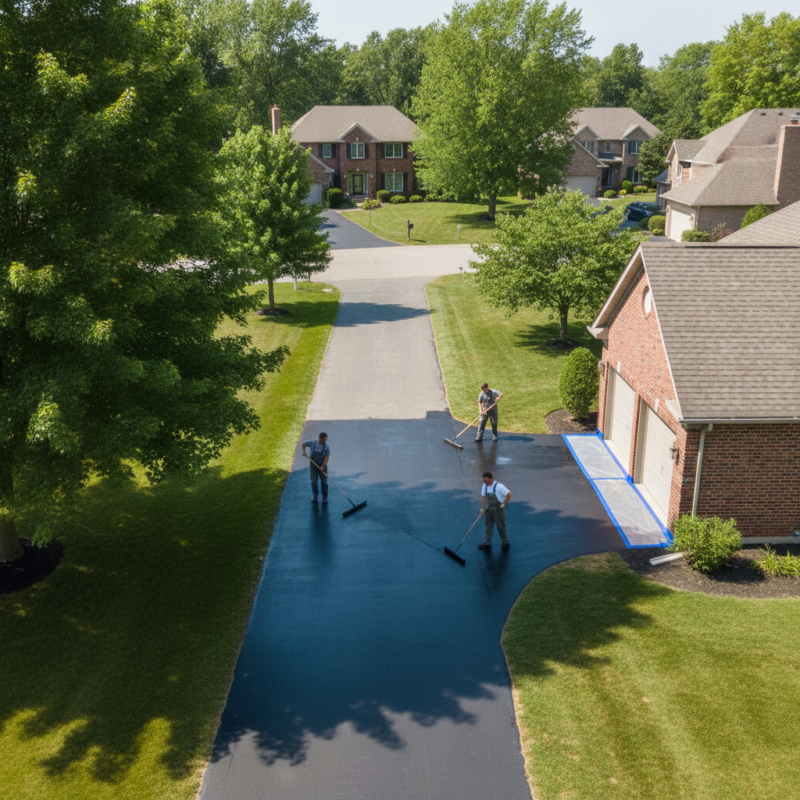
Reseal driveway cost depends on your driveway’s size, surface condition, prep needs, and the sealer system. Around 316 Bergamot Ave, routine sealing protects asphalt from sun, water, and winter salt, helping you avoid bigger repairs. Home Painter Services assesses each driveway on-site and specifies a clean, durable, low-disruption reseal plan.
By ZIKRIA MUJAHID — Home Painter Services • Last updated: 2026-07-04
Above-Fold: Quick answer on resealing
Resealing an asphalt driveway restores a protective film that blocks UV, water, and salt while refreshing color. The biggest cost drivers are square footage, crack repairs, cleaning/masking complexity, access, and the sealer you choose. Staying on schedule defers major fixes and keeps your curb appeal sharp.
Think of sealcoating as preventative care. It slows oxidation, helps repel spills, and keeps fine aggregates locked in. For most homes we serve near 316 Bergamot Ave, a disciplined maintenance rhythm beats one-time overhauls. You get a darker, even surface and a driveway that’s easier to sweep, shovel, and wash.
At a Glance
Plan resealing in dry, mild weather. Expect deep cleaning, crack sealing, crisp edge control, and two thin coats with proper cure time. Your final investment hinges on area, condition, repairs, and logistics—not just the coating. A professional assessment sets the right scope and timeline.
- Purpose: protect asphalt, refresh color, and slow wear.
- Timing: late spring to early fall windows perform best.
- Process: clean, repair, mask, apply thin coats, cure.
- Durability: prep quality matters more than coat thickness.
- Access: staging and traffic control affect labor and schedule.
- Fit with other work: pair with power washing or fence/deck staining for a single curb-appeal push.
What is driveway resealing?
Driveway resealing is a thin, protective topcoat over existing asphalt. It fills hairline voids, reduces water intrusion, slows oxidation, and restores a uniform dark tone. It is not repaving; it’s surface protection that buys time before deeper structural work is needed.
Asphalt is a mix of aggregates bound by asphalt cement. Sunlight and water slowly dry and embrittle that binder. A proper sealcoat blocks much of that exposure, so the binder stays flexible longer. The result is fewer early cracks and a driveway that looks newer between major repairs.
Reseal vs. repave
- Reseal: surface protection; treats hairlines and oxidation; improves appearance.
- Repave: structural work; needed for base failures, large alligator cracking, or potholes.
- Rule of thumb: if the surface is sound and mostly smooth, resealing is the smart move.
What sealcoat does well
- Masks color fade and minor raveling.
- Reduces water penetration at the surface.
- Improves cleanability after oil drips and salt tracking.
What sealcoat doesn’t do
- It won’t repair deep cracks or potholes.
- It won’t fix an unstable base or drainage issues.
- It isn’t paint; it’s a protective film that cures into the asphalt’s pores.
Why resealing matters
Asphalt is porous and vulnerable to UV and water. Without a protective film, oxidation and freeze–thaw cycles speed up cracking. A scheduled reseal limits moisture, preserves flexibility, and keeps the surface uniform—making sweeping, shoveling, and pressure washing faster and easier.
Here’s the thing: untreated driveways fade gray and chalky. Fine stones loosen and water seeps into microscopic voids. In winter, that moisture expands, prying the surface apart. We’ve seen this play out across Milton—especially on south-facing, unshaded drives that bake in summer and freeze hard in winter. A reseal interrupts that cycle.
Everyday benefits you’ll feel
- Cleaner look: darker tone reduces patchwork appearance.
- Faster snow clearing: smoother film sheds slush more easily.
- Less dusting: sealed fines don’t lift as quickly under tires.
- Easier upkeep: sweeping and rinsing take less time.
How resealing protects value
- Defers costly structural work by addressing small issues early.
- Pairs well with exterior painting, deck staining, and power washing for a unified curb-appeal upgrade.
- Supports resale photos with a neat, uniform entry shot.
How driveway resealing works (step-by-step)
A reliable reseal follows a tight sequence: inspect, deep clean, route and fill cracks, prime stains, mask edges, apply two thin coats, and let the film cure before traffic. Discipline at each step beats any attempt to rush application or stack on thick coats.
- Inspection: measure, photograph, and mark problem areas; define traffic plan.
- Deep cleaning: power wash, edge-brush, and blow debris until the surface is squeaky clean.
- Crack treatment: route active cracks, clean, and fill with rubberized material.
- Oil-spot priming: degrease and prime to ensure adhesion.
- Edge protection: tape or shield garage doors, borders, and pavers.
- Application: squeegee edges; spray or squeegee fields in two thin coats.
- Cure & reopen: protect with cones/tape until the film passes a finger-dry scuff test.
Return-to-service depends on temperature, humidity, shade, and airflow. In our experience, planning a half-day window for the application and staged reopening keeps family schedules intact. We coordinate vehicle placement so at least one car stays accessible during cure.
Types and methods
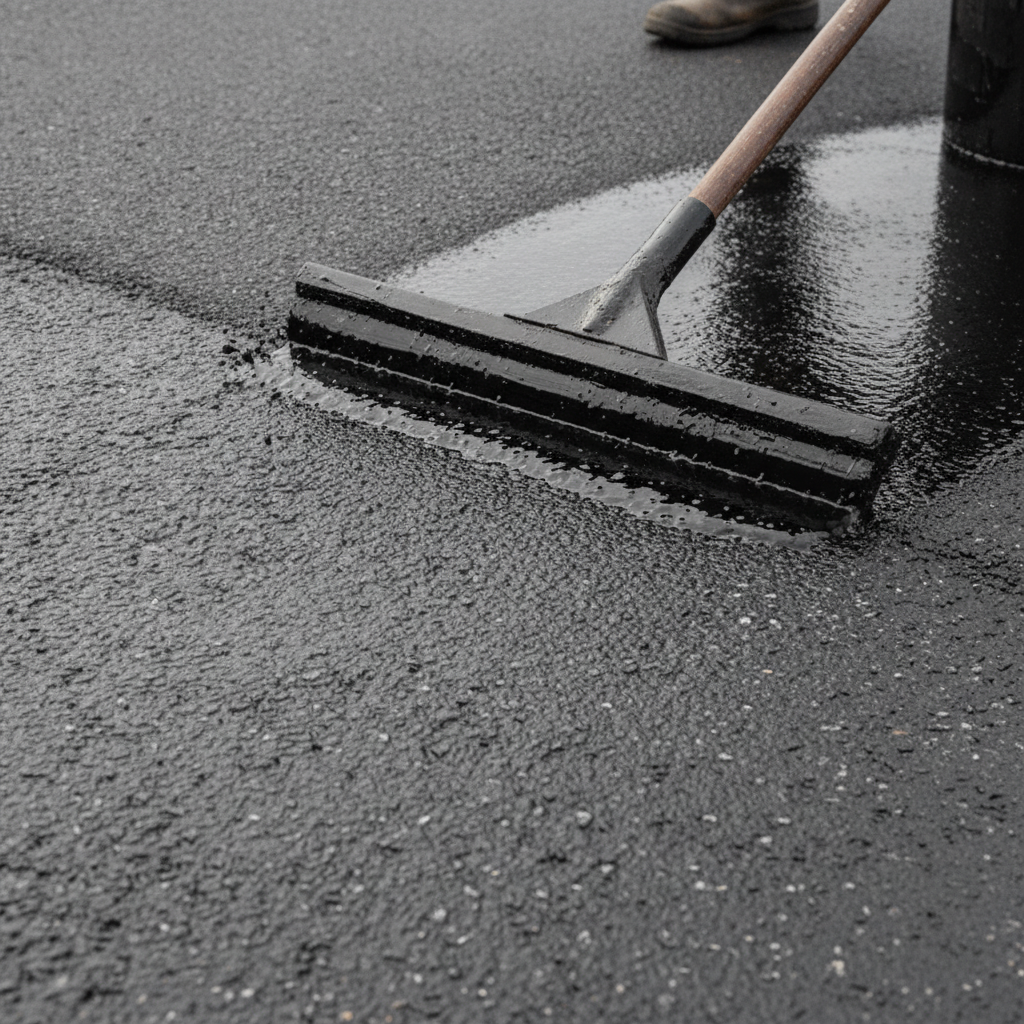
Most residential projects use asphalt emulsion or polymer-modified sealers. Squeegee application delivers control at edges; spray increases speed and uniformity on broad areas. Your surface age, shade, and wear patterns guide the system choice and whether one or two passes are warranted.
Sealer chemistries
- Asphalt emulsion: low odor and homeowner-friendly; good for routine maintenance.
- Polymer-modified: boosted flexibility and abrasion resistance for busier driveways.
Application formats
- Squeegee-first, spray-second: crisp edges plus uniform field coverage.
- All-squeegee: maximum control in tight or windy conditions.
- All-spray: efficient on large, open layouts with minimal edge risk.
When not to reseal (yet)
- Fresh asphalt that hasn’t cured or released oils fully.
- Surfaces with standing water or active base failures.
- Untreated oil spots—prime first or peeling is likely.
Best practices for a lasting seal
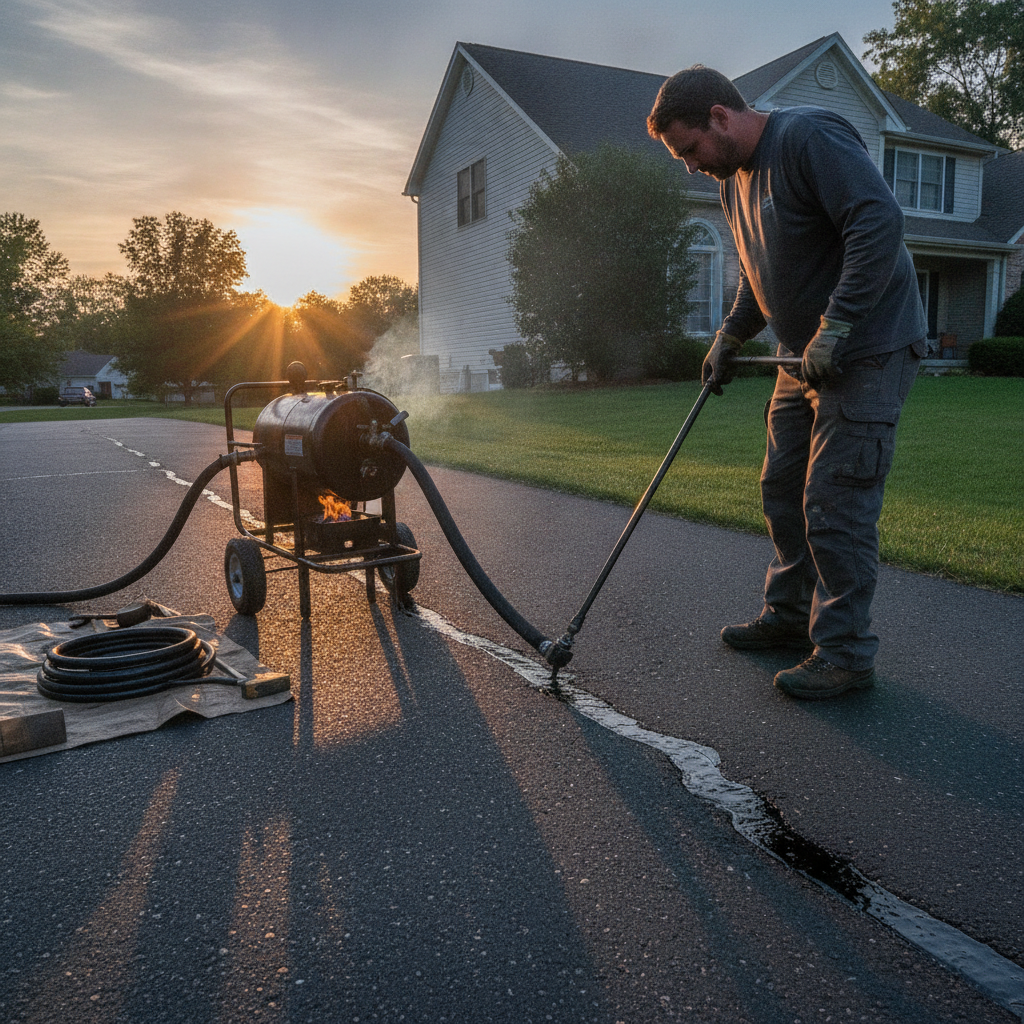
Surface prep is everything. Work on a dry, clean driveway; fix cracks first; prime stains; and apply two thin coats with proper cure. Protect edges, manage traffic, and avoid rain windows. The goal is a flexible, even film bonded to a sound surface.
Weather windows that work
- Target dry days with cooperative temperatures and low humidity.
- Avoid high winds that carry dust onto fresh coats.
- Plan for shade and sun; shaded areas may need more cure time.
Prep discipline
- Degrease oil spots thoroughly and use a bonding primer.
- Route and fill cracks so movement doesn’t telegraph through.
- Brush edges and joints so sealer contacts clean asphalt.
Aftercare that extends life
- Keep vehicles off until fully cured—don’t rush it.
- Skip tight turns or jack stands on day one to avoid scuffing.
- Rinse away salt routinely in winter to reduce chemical stress.
Tools and resources
Homeowners can maintain smaller, simple layouts with a stiff broom, blower, crack filler, and a squeegee. Larger or more weathered driveways benefit from pro-grade washers, routers, and hot-pour crack kettles. Safety gear, cones, and clear signage protect the work and your family.
Homeowner toolkit
- Leaf blower and edging broom for a meticulous clean.
- Crack filler for static hairlines; follow the label for cure.
- Squeegee for controlled application and edge work.
Pro toolkit we use
- Commercial power washers and surface cleaners for deep prep.
- Crack routers and hot-pour kettles for flexible, durable fills.
- High-capacity squeegees and spray rigs for even films.
Helpful planning reads
For big-picture planning and upkeep habits, this homeowner-friendly hardscape maintenance checklist offers seasonal reminders that pair well with resealing timelines.
Case studies near 316 Bergamot Ave
Local driveways share similar weather, traffic, and shade patterns. These short snapshots show how prep level, crack volume, and access shape a reseal plan. Prioritizing repairs and edges first consistently produces darker color, cleaner borders, and fewer scuffs after reopen.
Shaded north-side layout
- Challenge: leaf litter and slow dry times under trees.
- Approach: deeper wash, extended blower work, and a late-morning start to catch midday sun.
- Outcome: uniform tone with no tracking; cure completed by evening.
South-facing, sunbaked asphalt
- Challenge: advanced oxidation and color fade.
- Approach: polymer-modified sealer for flexibility and wear.
- Outcome: rich, even color with improved abrasion resistance for frequent vehicle use.
High-traffic family schedule
- Challenge: multiple vehicles and tight pickup windows near neighborhood routes.
- Approach: staged application with cones and a clear reopen plan timed around local activity by Tremaine at Bergamot.
- Outcome: zero tracking and a neat finish; access maintained for essential trips.
Reseal driveway cost factors
Your total investment is shaped by five inputs: area, existing condition, repair scope, cleaning and masking complexity, and the sealer system. Access and traffic control also affect labor. An on-site assessment captures these variables and informs a precise, project-based quote.
1) Total area and layout
- Square footage is the baseline driver for material and labor.
- Curves, islands, and paver insets add edge work and protection time.
- Long, narrow drives can mean extra staging and cone runs.
2) Current condition
- Oxidation, raveling, and color fade suggest more thorough prep.
- Raised edges or low spots may need leveling or targeted patching before sealing.
- Drainage patterns influence dry times and sequencing.
3) Repairs required
- Active cracks should be routed and filled to move with the pavement.
- Oil spots need degreasing and primer to prevent peeling.
- Patches or potholes call for separate repair steps before sealing.
4) Cleaning and masking complexity
- Edge brushing, garage masking, and paver protection add precision time.
- Tree shade and leaf litter often require extra blower and wash passes.
- Nearby foot traffic needs signage and a wider cone perimeter.
5) Sealer system and coat count
- Asphalt emulsion is reliable for routine cycles.
- Polymer-modified systems boost flexibility for busy driveways.
- Two thin coats typically outperform one heavy pass.
6) Access and traffic control
- Keeping one vehicle accessible reduces disruption but can extend setup time.
- Proximity to community spaces like Walker Park may call for added cones and timing finesse.
- Steep slopes or tight turns require added care to avoid runs and scuffs.
Want a deeper dive on scope planning? See our in-depth notes in the driveway sealing guide.
DIY vs. professional resealing
DIY can handle small, clean layouts with minor cracks and patient cure time. Professional crews bring industrial cleaning, routed hot-pour crack sealing, and high-capacity applicators that deliver uniform films faster. Choose based on time, tools, layout complexity, and your tolerance for redo risk.
| Aspect | DIY | Professional |
|---|---|---|
| Prep & cleaning | Household tools; slower | Commercial washers and blowers |
| Crack treatment | Cold-pour only | Routed, hot-pour flexibility |
| Application | Squeegee only | Squeegee + spray uniformity |
| Finish uniformity | Varies by skill | Consistent, crisp edges |
| Project time | Weekends | Hours, staged access |
When DIY makes sense
- Small, simple rectangles with light wear and few cracks.
- Flexible schedule to allow thorough cure before traffic.
- Willingness to mask carefully and work around wind and shade.
When to call pros
- Multiple active cracks, oil spots, or visible raveling.
- Complex edges around pavers, drains, and slopes.
- Need for fast turnaround and reliable, uniform results.
Curious about your reseal driveway cost? Book an on-site assessment and timeline plan. Our crews near 316 Bergamot Ave stage access, protect edges, and deliver a uniform finish. Explore our driveway sealing guide to see how we work.
Planning and design add-ons
If you’re considering layout changes—wider parking pads, turnouts, or edging—it’s smart to plan those first. Resealing should follow structural adjustments, patches, or extensions so the final coat reads as one continuous, uniform surface.
Thinking about changing the footprint? Browse practical driveway extension ideas to see how homeowners create extra space before sealing. We routinely coordinate timelines so repairs or additions cure properly prior to sealcoating.
Care and maintenance after resealing
Protect the new film in the first days: avoid tight steering, kickstands, and heavy jacks. Keep sand and salt rinsed off, and sweep leaves before they stain. A little attention extends the life of the coating and keeps the surface photo-ready.
- Use wide, gentle turns for the first week; reduce friction scuffs.
- Park motorcycle kickstands on pads to spread load on day one.
- Rinse winter salt periodically to reduce chemical stress.
- Blow leaves and grit so the finish doesn’t spot or scratch.
Want to compare pro maintenance approaches? Browse a regional profile of a maintenance specialist for perspective on methods and offerings: asphalt maintenance overview.
Frequently Asked Questions
How often should I reseal an asphalt driveway?
Many homes reseal on a two- to four-year cycle, but climate, shade, traffic, and winter salt can shift that interval. Watch for color fade, chalking, and early hairline cracks—those signals tell you the protective layer is thinning.
Will resealing fix deep cracks or potholes?
No. Sealcoating protects the surface and fills micro-voids, but structural failures need separate repair. We route and hot-fill active cracks and patch potholes before sealing so the film sits on a sound surface.
What weather is best for resealing?
Choose dry days with mild temperatures and low humidity for a steady cure. Avoid rain windows and overnight freezes. Shade and wind also affect dry time, so we schedule starts to catch the best sun and airflow.
Can I reseal over oil stains?
Yes, but only after degreasing and priming those spots. Without a bonding primer, the sealer won’t adhere and will peel or discolor. Cleaning and spot-priming are small steps that protect the whole job.
Key takeaways
Resealing is proactive protection, not a cosmetic shortcut. Prep, weather timing, and patient curing drive results. A short on-site assessment clarifies scope, logistics, and the best sealer for your specific layout and traffic patterns.
- Prep quality determines longevity; two thin coats beat one thick pass.
- Crack routing and hot-pour filling prevent telegraphed lines.
- Staging and cones protect edges and keep family routines intact.
- Plan layout changes or patches first; reseal last for a uniform look.
- Pair with power washing or deck/fence staining to maximize curb appeal in one mobilization.
Conclusion and next steps
A well-executed reseal stretches pavement life, elevates appearance, and reduces surprise repairs. Start with an on-site assessment, plan around the forecast, and insist on thorough prep. The payoff is a darker, cleaner driveway that stays easier to maintain season after season.
Ready to map your reseal driveway cost and timeline? We’ll evaluate area, condition, repairs, and access, then stage a clean, low-disruption day. Explore our driveway sealing guide and book your assessment.
Local considerations for 316 Bergamot Ave
- Check neighborhood activity near Walker Park and plan cone lines to keep the curing area clear.
- Late spring and early fall typically give balanced temperatures and steady cures.
- Traffic by Tremaine at Bergamot may warrant added signage and edge protection during busy hours.
