


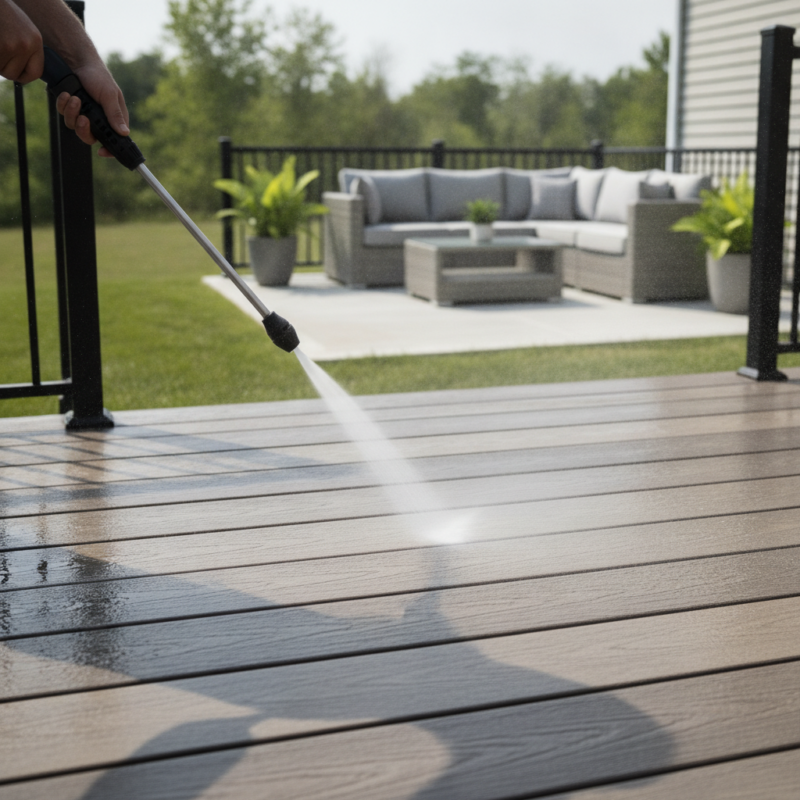
Power washing a Trex deck is the controlled use of low-to-moderate water pressure with a wide fan tip to lift dirt, algae, and grime from composite boards without etching the surface. Keep pressure under 1,500 PSI, hold the nozzle 8–12 inches from the deck, and move in steady passes to prevent streaks—especially in the 316 Bergamot Ave area where decks see four-season wear.
By ZIKRIA MUJAHID • Last updated: 2026-06-25
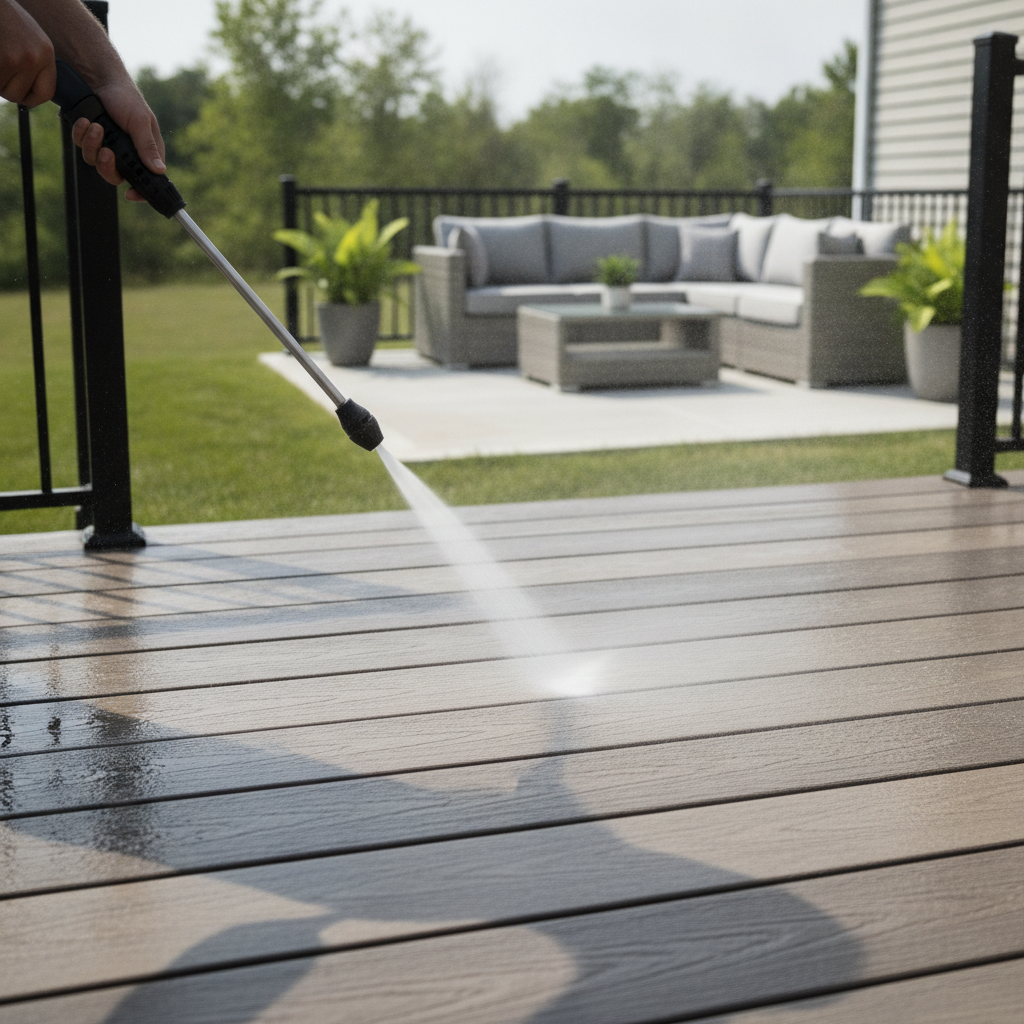
Above the fold: hook, outline, and quick table of contents
This guide explains how to power wash Trex composite decking safely and thoroughly. You’ll learn ideal PSI ranges, nozzle angles, cleaning chemistry, and step-by-step technique, plus post-wash protection options like staining adjacent wood rails. Use it as a DIY checklist or to vet a professional service before scheduling.
Ready to make your composite deck look new again without damage? Here’s what you’ll get in minutes:
- Exact PSI, nozzle, and distance ranges that protect Trex boards
- Fast prep checklist for furniture, railings, and landscaping
- Safe cleaners that target algae, mildew, grease, and tannins
- Step-by-step washing method with passes, overlap, and rinse timing
- Drying timelines (24–48 hours) and when to re-open the deck
- How washing fits into staining, sanding, and exterior repainting
Table of contents
- What is power washing a Trex deck?
- Why it matters for composite decks
- How power washing works on Trex
- Methods and approaches
- Best practices: the step-by-step
- Tools and resources
- Mini case studies and examples
- FAQ
- Conclusion + Key takeaways
Summary
Use a 40° fan tip, 1,000–1,500 PSI, and 8–12 inches of standoff to clean Trex safely. Pre-wet, apply a composite-safe cleaner, dwell 5–10 minutes, then rinse in overlapping passes. Work top-down, keep water below 120°F, and let the deck dry 24–48 hours before heavy use or furnishings.
Composite decking is hard-wearing but still vulnerable to gouging and fiber lift from narrow tips, hot water, and excessive PSI. A gentle setup paired with the right detergent does most of the cleaning; pressure only lifts the residue. Use even strokes, consistent overlap (30–50%), and protect soft landscaping with a quick pre-rinse.
What is “power washing” a Trex deck?
Power washing a Trex deck means using a controlled-pressure rinse with a wide fan nozzle to remove soil, algae, and spills from composite boards. The goal is to restore color and traction without etching the polymer cap. Cleaning chemistry loosens grime; water pressure finishes the job.
“Trex” is a leading composite brand that combines reclaimed wood fibers and plastic with a durable cap. That top layer resists stains and fading, but it can scuff or streak if you use a pinpoint nozzle or too much pressure. We treat pressure as the last 20% of cleaning power—the first 80% comes from proper detergents and dwell time.
- Safe working range: 1,000–1,500 PSI for composite boards
- Nozzle: 40° (white) or 25° (green) for stubborn algae at a greater distance
- Standoff: 8–12 inches; increase to 12–16 inches on rail skirts and steps
- Water temperature: ambient to lukewarm (under ~120°F) to protect the cap
- Dwell time: 5–10 minutes for most detergents; never let cleaners dry
On projects near 316 Bergamot Ave, we see spring pollen, summer barbecue grease, and fall leaf tannins accumulate. A seasonal wash followed by light maintenance rinses extends the “like-new” look and keeps surface traction consistent during wet weather.
Why safe power washing matters for composite decks
Composite boards resist many stains, but high-pressure streams, pin-tip nozzles, and hot water can scar the surface. Safe technique preserves the cap, keeps color uniform, and prevents fuzzy fibers. It also reduces slip hazards by removing algae films that can form after just a few rainy weeks.
Here’s the thing—composite’s strength is also its Achilles’ heel. The cap repels soil, so grime stays near the surface. If you blast it with a 0° or 15° tip at close range, you can carve stripes that remain visible in raking light. We’ve found even a 25° nozzle needs extra distance (12–16 inches) to avoid etching at 1,500 PSI.
- Uniform color relies on even overlap and a fixed nozzle height across boards.
- Algae films as thin as a few microns reduce wet traction; removing them improves safety.
- Consistent rinsing direction (with board grooves) keeps rinse water from driving dirt under caps.
- Dry times vary: plan 24 hours in sun, up to 48 hours in shade or after cool, damp weather.
In our experience, homeowners who switch from a pin tip to a 40° fan, cut their PSI to about 1,200, and keep the wand moving prevent 90% of streaking issues. The remaining gains come from chemistry—composite-safe detergents aimed at the specific soil.
How power washing works on Trex
The process is chemistry-first, pressure-second. Detergents break the bond between grime and the cap; moderate pressure lifts the film without scarring. Pre-wetting protects plantings and cools boards, while overlapping passes ensure uniform appearance and traction recovery.
Think of soil as layers: organic biofilm (algae), tannins from leaves, grease near the grill, and general dust. Each layer responds to a different cleaner. For example, a percarbonate-based wash foams and oxidizes organics, while a mild surfactant lifts footprints and dust. We match chemistry to the soil, then use measured pressure to finish.
- Percarbonate cleaners: effective on algae/mildew; dwell 8–10 minutes.
- Neutral pH surfactants: lift general soil; safe on surrounding landscaping when rinsed.
- Enzymatic degreasers: spot-treat grill splatter; agitate with a soft-bristle brush.
- Iron/tannin removers: target leaf stains; test in a small, shaded area first.
We also control water flow and pattern. A 40° tip at 1,200 PSI moving 12–18 inches per second with 30–50% overlap gives a uniform finish. Faster passes risk leaving faint tiger stripes that show up when the deck dries. Slower passes raise the chance of over-wetting seams; a steady cadence is your friend.
Types, methods, and approaches
Choose between a low-pressure rinse with composite-safe detergent, a soft wash (very low PSI plus chemistry), or targeted spot-cleaning with a brush. For most Trex decks, low-to-moderate pressure with a 40° tip and proper dwell time delivers the best balance of speed and safety.
Approach comparison at a glance
| Method | Pressure | Nozzle | Distance | Best for | Watch-outs |
|---|---|---|---|---|---|
| Low-pressure rinse + detergent | 1,000–1,500 PSI | 40° | 8–12 in | General cleaning, algae film | Avoid hovering; use steady overlap |
| Soft wash (pump sprayer + hose) | Under 500 PSI (hose) | Fan sprayer | 12–18 in | Light soil, frequent maintenance | Longer dwell; thorough rinse needed |
| Spot-clean + brush | N/A | N/A | Contact | Grease, rust/tannin spots | Use soft bristles; avoid abrasives |
Not sure which path to pick? If the deck has visible green film over 10% of boards, we favor the low-pressure rinse with percarbonate chemistry. If soil is light and even, a soft wash every 6–8 weeks in peak season keeps the deck looking great with minimal water use.
Best practices: step-by-step for power washing Trex decking
Prep thoroughly, then clean in a measured sequence: clear the deck, pre-wet, apply cleaner, dwell 5–10 minutes, agitate trouble spots, rinse with a 40° tip at 1,000–1,500 PSI from 8–12 inches away, and dry 24–48 hours. Keep strokes even and work with the board direction.
Preparation checklist (10–15 minutes)
- Remove furniture, planters, and mats; lift rugs to prevent trapped moisture lines.
- Blow debris from seams; vacuum stubborn leaf build-up along house walls.
- Protect outlets and nearby doors with plastic and tape; close basement vents.
- Pre-rinse surrounding plants and grass for 60–120 seconds to dilute splash-back.
- Inspect for lifted fasteners; mark any items to avoid with chalk.
Cleaning sequence (30–60 minutes depending on size)
- Pre-wet boards to cool surfaces and prevent flash-drying of detergent.
- Apply composite-safe cleaner with a pump sprayer; coat evenly until glistening.
- Dwell 5–10 minutes; keep shaded or mist lightly so it never dries.
- Agitate high-traffic spots using a soft-bristle deck brush (10–20 strokes).
- Rinse with a 40° tip at 1,200 PSI from 10 inches away, moving 12–18 in/sec.
- Overlap 30–50% board-to-board to avoid tiger-striping in sunlight.
- Final rinse from house to rail edge so water sheds off, not under siding.
Drying, re-entry, and maintenance
- Light foot traffic after 4–6 hours in warm sun; full use after 24–48 hours.
- Replace furniture with felt pads; avoid dragging tables across boards.
- Plan maintenance rinses every 6–8 weeks during peak pollen/algae season.
- Schedule a deeper clean after heavy grill use or leaf-drop events.
Pro tip: Treat stair treads like a separate micro-project. Shorter boards and nosings hold water; slow your passes to 8–12 inches per second and rinse downward so water doesn’t backflow over risers.
Tools and resources you’ll actually use
Choose a 1.2–2.0 GPM pressure washer with adjustable pressure, a 40° tip, and a pump sprayer for detergents. Pair percarbonate cleaner for algae with a mild surfactant for general soil. Add a soft-bristle brush, PPE, and a simple moisture meter to confirm dry times.
- Washer: Electric or gas with adjustable regulator; 1,000–1,500 PSI target output for decking.
- Nozzles: 40° fan tip (primary), 25° for distant, stubborn edges only.
- Chemistry: Percarbonate for biofilm; neutral surfactant for dust; enzyme degreaser near grills.
- Sprayers/brushes: 1–2 gallon pump sprayer; 10–12 inch soft deck brush.
- Safety: Closed-toe shoes, gloves, eye protection; avoid ladders when spraying.
- Moisture check: Under 15% surface moisture before replacing large rugs or storage benches.
If you want a deeper dive on surface prep that ties into painting projects, see how calculations and planning influence finish quality in our paint calculator tips. The same discipline—measure, prep, then apply—pays off on decks too.
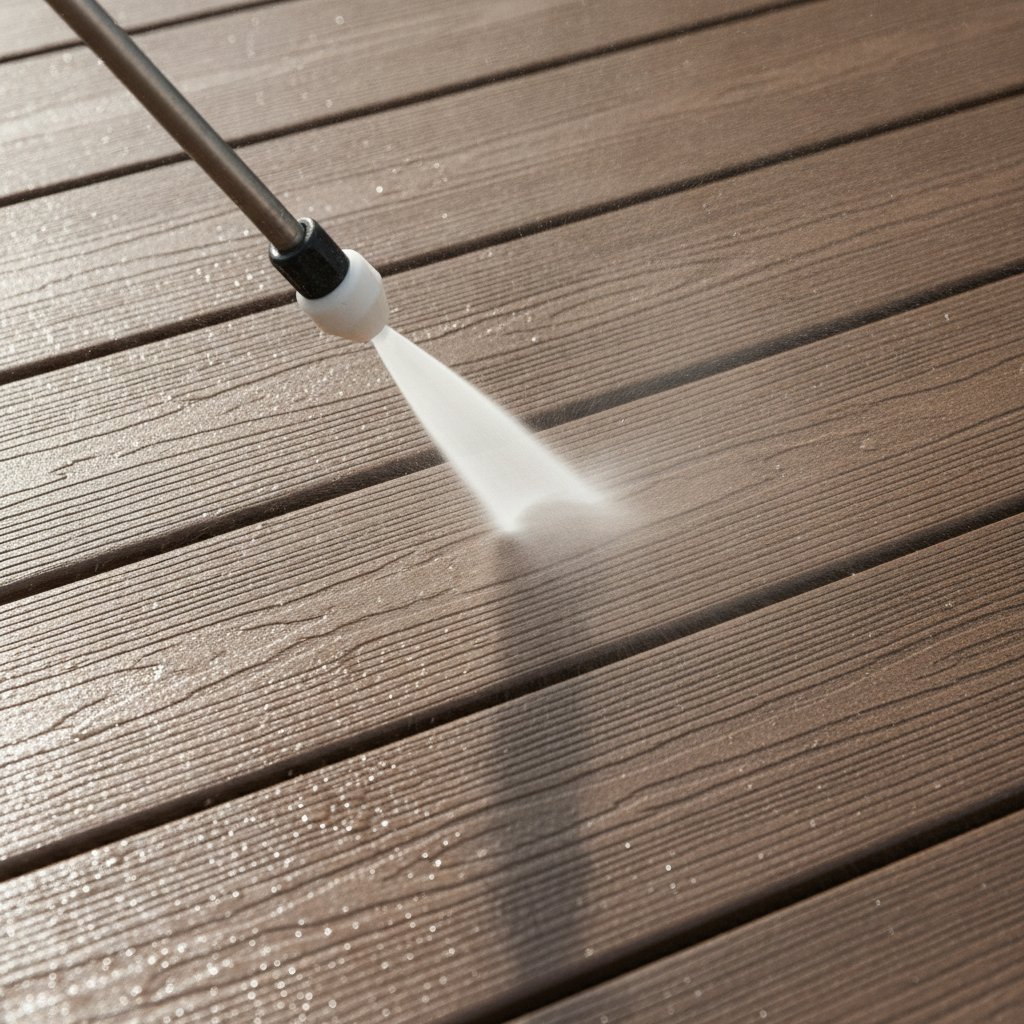
Local tips for 316 Bergamot Ave composite decks
Plan your wash around local weather and shade patterns. Aim for mid-morning starts, avoid direct noon sun, and expect longer dry times in shaded corners. Consider traffic from nearby stops at Tremaine at Bergamot and airflow from Walker Park—both influence pollen and dust on deck surfaces.
Local considerations for 316 Bergamot Ave
- Start mid-morning to avoid hot boards and strong midday sun; north-facing rails around Walker Park stay damp longer, so extend dry time by 6–8 hours.
- During late spring, rinse pollen off weekly; that keeps composite pores from hosting early algae blooms after 2–3 rainy days.
- Wind channels near Tremaine at Bergamot can push dust under furniture pads—lift and wipe pads after each wash to prevent ghost outlines.
Where power washing fits with staining, sanding, and painting
Use washing as the first step before any finish work. Clean decks, sand adjacent wood rails lightly, then stain or repaint once dry. Washing also supports caulking, exterior painting touch-ups, and even garage floor projects by removing airborne dust that settles on fresh coatings.
We regularly sequence deck care into broader exterior refreshes:
- Deck sanding and staining: After washing and 24–48 hours of dry time, sand wood rails and steps to 80–120 grit and apply a UV-protective stain. Composite boards themselves aren’t sanded; the wood components are.
- Exterior repainting: Clean siding and rails first. Washing reduces fisheyes and improves adhesion. For color planning, see lessons carried over in our painting a room black article—contrast and sheen choices outdoors matter too.
- Window re-caulking: Clean frames and sills prior to resealing. Less dust means better adhesion and fewer voids.
- Garage epoxy flooring: Keep dust down outdoors while coating indoors; a fresh-washed deck reduces airborne grit that can land in wet epoxy. For durability insights, we share prep principles in our epoxy flooring guide.
If your project touches multiple surfaces in one week, stage tasks so each coating gets a clean, dust-free window. Wash on day one, stain or paint on day three or four, weather permitting.
Safety checks and the mistakes that damage Trex
Avoid pin tips, close-range blasting, and hot water. Keep feet planted, wear eye protection, and never spray electrical boxes or under siding. Test pressure on an inconspicuous board first; if fibers lift or color darkens unevenly, back off PSI or increase distance.
- Don’t etch the cap: Skip 0° and 15° tips on boards. If you must, stay 18–24 inches away and use them only on metal or masonry nearby.
- Avoid ladder work: Reposition your body and wand instead; the recoil from even 1.5 GPM can destabilize footing.
- Keep water below 120°F: Hot water can soften the polymer cap and raise streak risk.
- Respect dwell time: If cleaner dries, it may leave film; re-wet or reapply before rinsing.
- Mind runoff: Direct rinse water toward turf, not mulch beds or open window wells.
For more background on deck materials in our region and why gentle methods matter for composites, review these practical notes on pressure-treated vs. composite decking. It’s a helpful primer before you pick cleaners and tools.
Troubleshooting: stains, stripes, and slippery spots
If you see faint stripes after drying, you likely moved too fast or overlapped unevenly. Re-wet, apply a light cleaner, and rinse with slower, consistent passes. For grease or tannins, spot-treat with targeted chemistry and a soft brush before a final uniform rinse.
- Algae returns fast? Increase dwell time to 8–10 minutes and clean earlier in the season; schedule follow-up rinses every 6–8 weeks.
- Grease shadows near the grill? Use an enzymatic degreaser; agitate 10–20 strokes; rinse from 12–16 inches.
- Leaf tannins or rust? Try a composite-safe tannin remover; always test a 2–3 inch area first.
- Slippery after rain? That’s algae film. A percarbonate wash followed by consistent overlap restores traction.
If streaks persist under raking light, check your nozzle angle. Tilting 10–15 degrees off perpendicular can reduce reflective banding on darker boards.
Get a pro-grade, gentle clean (soft CTA)
Prefer a done-for-you option? Our team sequences low-pressure washing with the right chemistry, then staggers drying windows so you can get back to normal fast. We also coordinate staining, repainting, and caulking if you’re planning a full exterior refresh.
When you want a factory-clean look without the factory-level disruption, we can help. We follow the same prep-first discipline we use for interior paint, cabinet spraying, and epoxy floors—protect, clean, then coat where needed. Ask about scheduling around family routines or backyard events.
For an operations-focused perspective on high-standard washing workflows, see this overview of commercial power washing. Many of the sequencing and safety principles scale down neatly to residential decks.
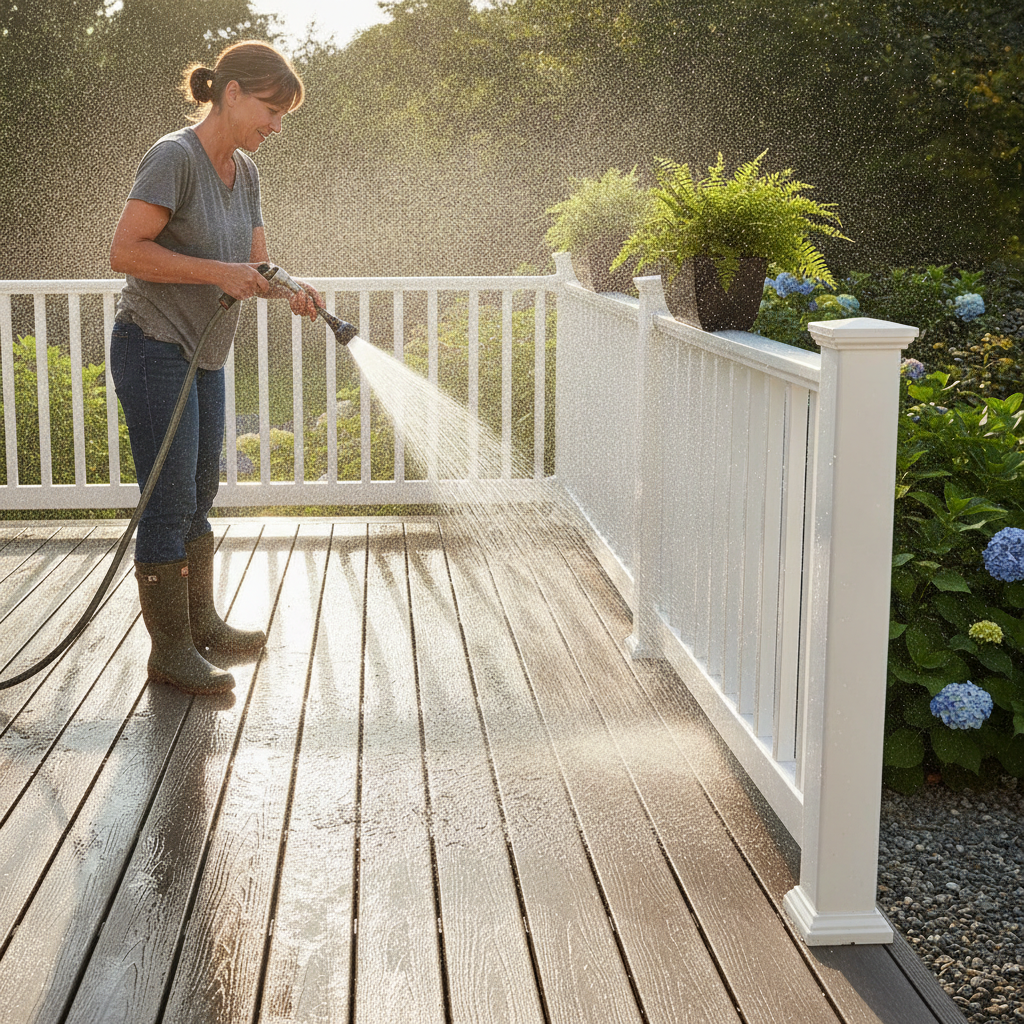
Printable checklists you can follow
Use two quick lists: a 10-minute prep list and a 30–60 minute cleaning list. They keep you on sequence and help you avoid common errors like letting detergent dry, rushing passes, or pushing rinse water under siding. Tape them to the back door before you start.
10-minute prep
- Remove and lift (furniture, planters, mats)
- Pre-rinse plants (60–120 seconds)
- Tape outlets and door thresholds
- Blow debris from seams
- Set pressure to 1,200 PSI; attach 40° tip
30–60 minute clean
- Pre-wet boards
- Apply composite-safe cleaner
- Dwell 5–10 minutes (don’t let it dry)
- Brush stubborn spots
- Rinse with 30–50% overlap
- Final rinse away from siding
- Dry 24–48 hours before heavy use
If your deck is adjacent to painted siding, washing first reduces the time you’ll spend on masking or sanding before touch-ups. We discuss how small planning moves save hours in our interior painting planning guide.
Mini case studies from our crews
We’ve cleaned dozens of composite decks that live through snow, spring pollen, and summer cookouts. The biggest wins come from matching chemistry to stains, slowing passes to kill stripes, and staging dry time before reloading heavy furniture. Here are three quick snapshots.
1) Early-spring algae film
- Soil: green film on 40–50% of boards after a wet thaw
- Fix: percarbonate cleaner, 8-minute dwell, 40° rinse at 1,200 PSI from ~10 inches
- Result: traction improved; uniform sheen in afternoon sun; no stripes
2) Grill zone grease
- Soil: dark splatter within 3–4 feet of the grill
- Fix: enzymatic degreaser, 20 strokes with soft brush, then longer-distance rinse
- Result: shadows gone; cap gloss remained consistent with adjacent boards
3) Leaf tannin ghosts in shade
- Soil: brownish stains where a mat trapped wet leaves
- Fix: tannin remover spot-test, 6-minute dwell, light agitation, full-deck rinse
- Result: discoloration lifted; board tone matched sun-exposed areas
If you’re planning a weekend project near Walker Park, budget extra dry time for shaded rails and stair stringers. Shade can double moisture retention, so aim for the 36–48 hour range before replacing heavy planters.
Frequently Asked Questions
Quick answers help you make decisions fast. These FAQs cover PSI, nozzle choices, dry times, and what to do about stubborn stains. Each answer is concise and geared to the steps above, so you can act with confidence and avoid preventable damage.
What PSI should I use to power wash Trex decking?
Stay in the 1,000–1,500 PSI range with a 40° fan tip and keep the nozzle 8–12 inches from the surface. If you see fuzzing or striping, either increase your distance or lower PSI until the spray only lifts loosened soil.
Can I use bleach on a composite deck?
Avoid straight household bleach. It can lighten pigments and degrade nearby landscaping. Use a composite-safe cleaner—percarbonate for algae or a neutral surfactant for general soil—then rinse thoroughly with a 40° tip.
How often should I clean a Trex deck?
Plan a deep clean once per season and light maintenance rinses every 6–8 weeks during peak pollen or rainy periods. Heavy grill use or dense tree cover may call for an extra mid-season wash to keep traction and color uniform.
Will power washing void my deck warranty?
Using safe settings typically won’t, but always follow your manufacturer’s care guide. Stick to a wide fan nozzle, modest PSI, and composite-safe cleaners. Test a small area first and document settings if you’re concerned about warranty language.
Conclusion and key takeaways
Clean Trex decks with chemistry-first, pressure-second. Use a 40° fan, 1,000–1,500 PSI, and steady overlap from 8–12 inches. Pre-wet, dwell 5–10 minutes, agitate trouble spots, then rinse top-down. Dry 24–48 hours before heavy use. This routine preserves color, traction, and the composite cap.
Key takeaways
- Pressure is not the hero—chemistry and dwell time do most of the work.
- 1,000–1,500 PSI with a 40° tip from 8–12 inches protects the cap.
- Overlap 30–50% for uniform color and no tiger stripes.
- Plan 24–48 hours of dry time; longer for shaded rails and steps.
- Stage washing before staining rails, painting, or re-caulking windows.
Ready to schedule a safe, low-disruption wash in the 316 Bergamot Ave area? We’ll plan around your calendar and coordinate any follow-on staining or painting. If you’d like more context on safety and workflows, skim this practical note on power washing safety before you start.
