


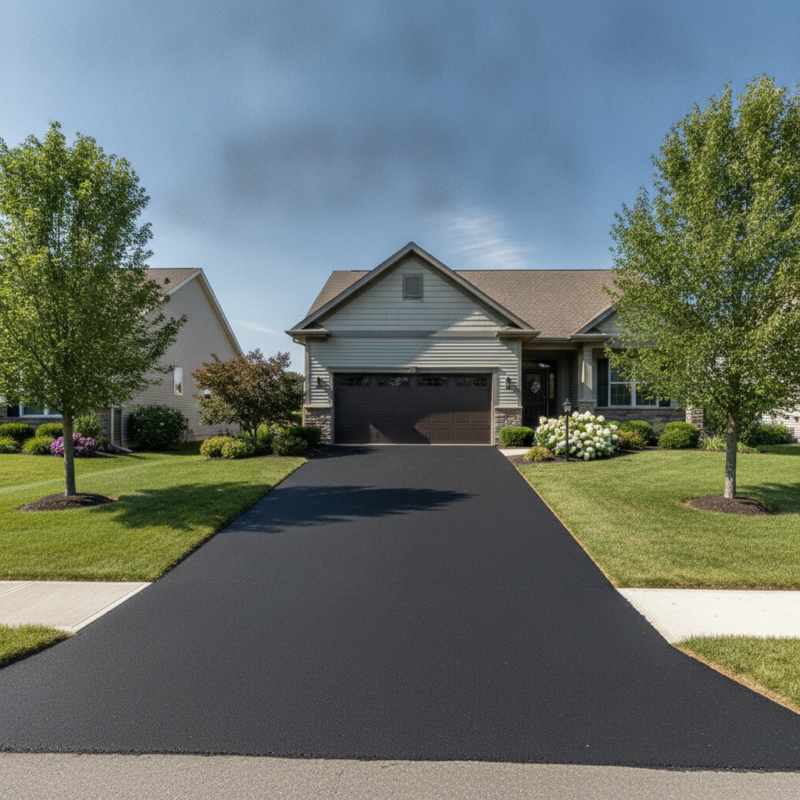
Driveway sealing price refers to the non-porous protection you put on asphalt to slow wear, block water, and keep a deep, clean look. In Milton near 316 Bergamot Ave, the investment depends on surface condition, preparation, and materials—not a flat rate. Done right, sealing boosts curb appeal and extends asphalt life.
By ZIKRIA MUJAHID · Home Painter Services
Last updated: 2026-07-04
At a Glance
Driveway sealing preserves asphalt by filling fine pores, reducing water and UV damage, and refreshing color. Price is shaped by prep needs, crack repair, sealer chemistry, access, and timing. Home Painter Services focuses on prep, pro-grade coatings, and on-time delivery so your driveway looks sharp and lasts longer without surprises.
Here’s how this complete guide helps you make a confident, value-focused decision without listing prices.
- Understand what driveway sealing is and why it matters.
- See the real factors behind driveway sealing price—no dollar amounts.
- Learn the step-by-step process pros follow for durable results.
- Compare DIY vs. professional results in an easy table.
- Get local tips for homes near 316 Bergamot Ave and adjacent streets.
- Explore adjacent upgrades like power washing, deck sanding, and window re-caulking.
What Is Driveway Sealing?
Driveway sealing is the application of a protective coating over asphalt to reduce water penetration, UV damage, and staining. It refreshes color, fills hairline pores, and slows oxidation. The best outcomes come from thorough cleaning, crack repair, and two thin coats applied in proper weather windows.
Think of sealing like sunscreen for asphalt. Asphalt binder dries and oxidizes over time, turning gray and brittle. A quality sealer replenishes surface protection, helping resist water, de-icing salts, and seasonal temperature swings. That means fewer cracks, fewer patches, and a driveway that stays darker, longer.
How sealing protects your surface
- Moisture control: Fewer freeze–thaw cycles reach the base, reducing heaving.
- UV shielding: Slows the binder’s oxidation that leads to raveling and dusting.
- Stain resistance: Helps resist oil drips and everyday grime when cleaned promptly.
- Appearance: Restores a uniform, low-sheen black that elevates curb appeal.
In our experience with Milton and Mississauga homes, well-prepped, professionally sealed driveways often stay looking fresh through multiple seasons, provided routine maintenance is followed (gentle cleaning and timely crack touch-ups).
Why Driveway Sealing Matters
Sealing matters because asphalt is porous and vulnerable to water and sunlight. A protective coat lowers maintenance, defers major repairs, and improves first impressions. For family homes, the payoff is durability, safety, and cleaner entrances that complement exterior paint and landscaping.
Here’s the thing: asphalt failures usually start small—hairline cracks, light raveling, faint stains. Left alone, they spread. A disciplined seal cycle paired with timely crack filling interrupts that pattern. It’s a smart, preventative approach that supports your overall property plan alongside exterior painting, deck and fence staining, and power washing.
Benefits you actually notice
- Fewer trip hazards: Early crack treatment helps limit edge crumbling.
- Easier cleaning: A sealed surface releases dirt more readily during rinses.
- Consistent color: Fresh, even tone pairs well with new siding or trim paint.
- Stronger home value story: A maintained driveway signals a cared-for property.
Pairing sealing with our exterior window caulking replacement and power washing gives you a cleaner envelope—less drafty windows, brighter siding, and a driveway that frames it all.
What Shapes Driveway Sealing Price?
Driveway sealing price is shaped by surface condition, cleaning and crack repair, sealer chemistry, access constraints, and weather timing. Homes with heavy prep needs, tight access, or advanced coatings require more labor and materials. Simple, open layouts with light prep are typically more straightforward.
We never publish prices because each property is unique. Instead, here are the practical levers that influence the final number so you can plan the best-value path forward.
Surface and prep scope
- Cleaning intensity: Light dust vs. bonded grime determines whether a quick rinse or commercial-grade power washing is required.
- Crack complexity: Hairline vs. 1/8-inch-plus cracks guide the filler type and number of passes.
- Stain remediation: Oil and rust need targeted treatment to help sealer bond evenly.
- Edge definition: Overgrown grass and crumbling shoulders take added time to shape.
Materials and method
- Sealer chemistry: Options range from asphalt-emulsion to polymer-modified blends that improve flexibility and wear.
- Number of coats: Two thin coats often outperform one heavy coat for uniformity and cure.
- Crack filler type: Cold-pour vs. hot-applied elastomeric fillers differ in labor and performance characteristics.
Access, layout, and timing
- Obstructions: Tight gates, steep grades, or parked vehicles increase setup time.
- Weather window: Cool, damp days slow drying; warm, dry days speed it up and support even film build.
- Traffic management: Coordinating cure time with family schedules helps avoid early tire tracking.
For homeowners near 316 Bergamot Ave, our crew schedules sealing during favorable windows and staggers coat application to minimize disruption—aligned to our Guaranteed On-Time Completion promise.
How Driveway Sealing Works (Step by Step)
Effective sealing follows a disciplined sequence: inspect, clean, edge, repair cracks, mask, apply two thin coats, and allow proper cure. Skipping steps shortens coating life. Following the sequence yields better adhesion, smoother color, and fewer callbacks.
Below is the pro workflow our residential crews follow. The exact details flex based on your driveway’s age, shade exposure, and prior products, but the fundamentals remain consistent.
- Assessment and plan: Identify cracks, oil spots, drainage paths, and prior coating. Define repairs and sealer chemistry.
- Deep cleaning: Sweep and power wash to remove dust, moss, and fines for a clean bond surface.
- Edges and vegetation: String-trim grass, shape borders, and brush debris off shoulders.
- Crack treatment: Clean cracks, then fill. Wider gaps are addressed first so the sealer lays level.
- Masking: Protect garage doors, curbs, walkways, and masonry to avoid splash marks.
- First coat application: Squeegee or spray a controlled, thin film. Aim for even coverage without puddles.
- Second coat: After the first coat sets, apply the finish coat for uniform tone and extra protection.
- Cure and reopen: Respect the cure window before foot and vehicle traffic to prevent scuffing.
When your goal is long-term durability, two thinner coats typically outperform one thick coat because they cure more evenly and reduce the chance of tracking.
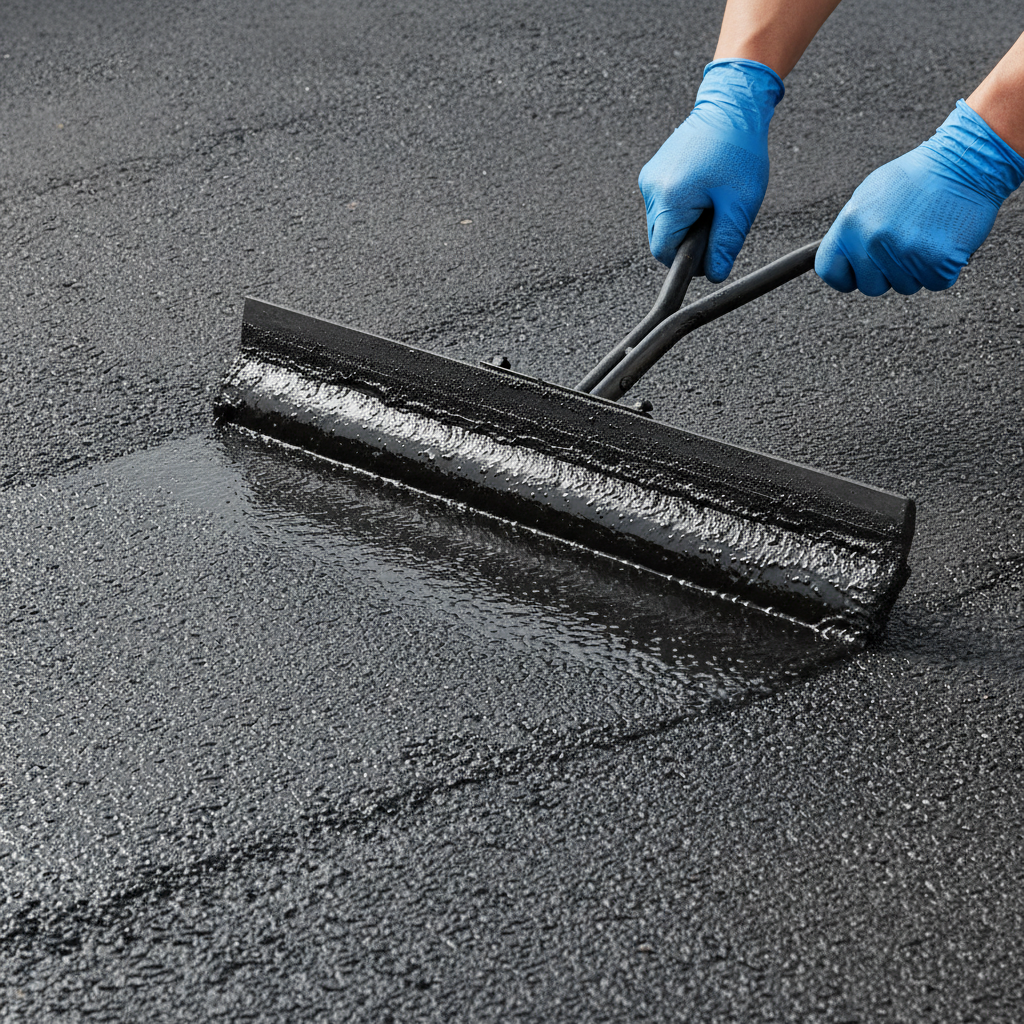
Timing and cure windows
- Dry-to-touch: Often within hours under warm, dry conditions.
- Cure for foot traffic: Typically later the same day in ideal weather.
- Cure for vehicle traffic: Commonly after a full day or longer, depending on temperature and humidity.
- Weather risks: Rain or heavy dew too soon can mar the finish; we track forecasts closely.
We coordinate with your household schedule—strollers, school pickups, and garage access—so the coating cures undisturbed and looks its best.
Types of Sealers and Application Methods
Sealer options include asphalt-emulsion, acrylic, and polymer-modified blends. Application is by squeegee, broom, or low-pressure spray. The right choice depends on driveway age, sun exposure, and prior treatments. Two thin coats usually deliver the most uniform, lasting finish.
Not all sealers behave the same. Viscosity, solids content, and curing profile change how they lay and how long they last. We prioritize proven, professional-grade products that bond well in local weather and complement your broader property plan.
Common sealer families
- Asphalt-emulsion: A go-to for many homes; balances protection and appearance with straightforward cleanup.
- Acrylic-based: Offers color retention and fast drying in the right conditions.
- Polymer-modified: Enhanced flexibility and wear; useful for sun-exposed, high-traffic zones.
Application choices
- Squeegee/broom: Excellent control around edges and joints; promotes even film thickness.
- Spray: Efficient on larger pads; requires masking discipline and experienced operators.
Whichever path you choose, surface prep and weather windows do more for longevity than the tool alone. That’s why our crews combine commercial-grade power washing, crack repair, and careful masking before any coating hits the ground.
Best Practices for Long-Lasting Results
Durable sealing comes from prep-first discipline: deep cleaning, crack treatment, controlled coating thickness, and patient cure times. Keep vehicles off until fully cured, rinse gently during the first weeks, and readdress new cracks early to preserve the protective envelope.
These practices are small, but they compound. Get them right, and you push major repairs further out while keeping the dark, uniform look that boosts curb appeal.
Prep and application
- Clean bond surface: Pressure wash grime; let it dry thoroughly before coating.
- Crack-first approach: Fill wider gaps before any sealer so coats lay flat.
- Two thin coats: Helps avoid puddling and track marks.
- Edge discipline: Use brushes along pavers, turf, and garage thresholds for crisp lines.
Weather and cure
- Temperature window: Aim for warm, dry days with minimal wind.
- Traffic timing: Stage family cars on the street until the driveway is ready.
- Early care: Avoid sharp turns and kickstands when the film is fresh.
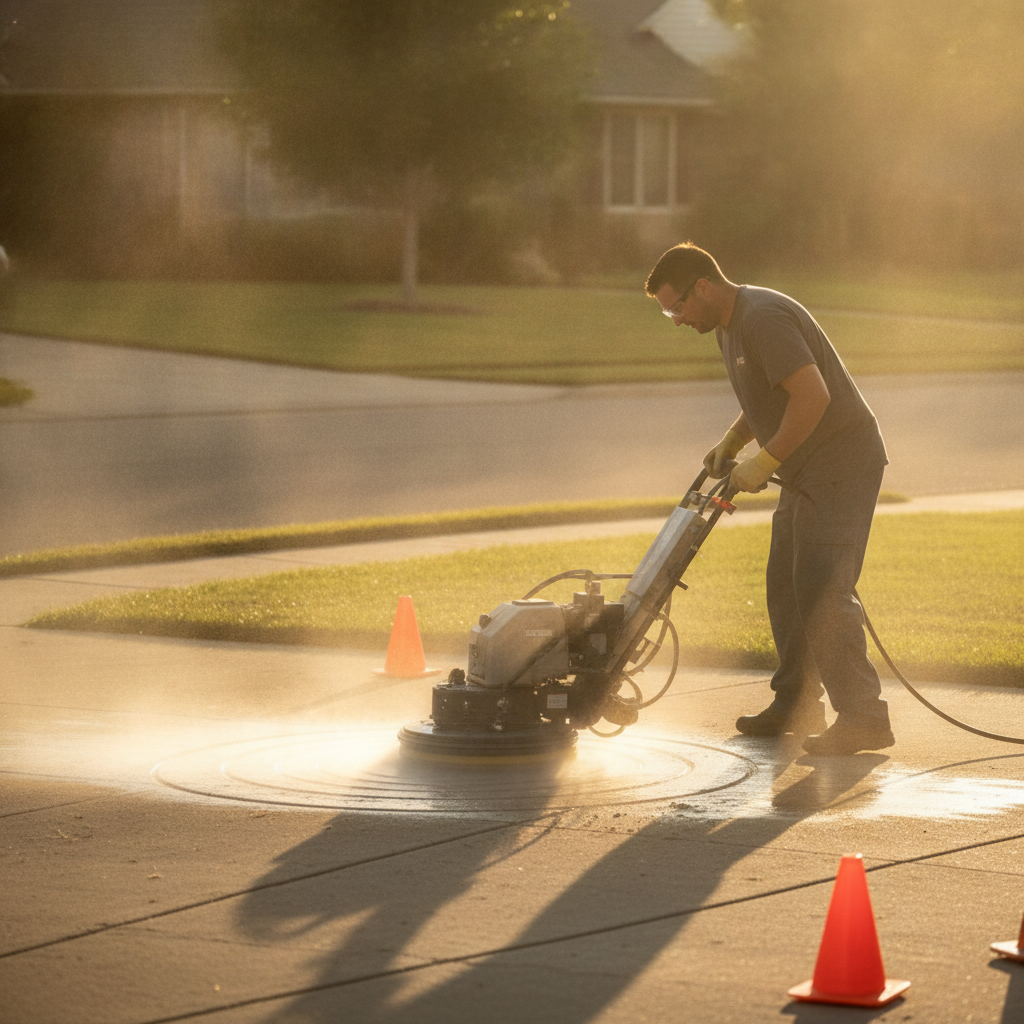
Pair best practices with complementary upkeep—like our power washing and exterior window caulking replacement—and your home’s entries, trim, and driveway work together as a low-maintenance system.
Free on-site assessment: We include a Free Estimate Visit and align sealing with any painting or staining you’re planning, including deck sanding or fence staining. Our crews protect surfaces, communicate clearly, and honor our On-Time Completion commitment.
Tools and Resources (What Pros Use)
Professionals combine high-output cleaning gear, crack repair tools, and calibrated application equipment. The goal is a clean bond surface and consistent film thickness. Homeowners can DIY smaller jobs, but pro tools speed prep, improve edges, and reduce call-backs.
Surface cleaning and repair
- Commercial power washer: Lifts bonded grime and fines for better adhesion.
- Surface cleaner head: Keeps spray uniform, minimizing striping.
- Crack-router and blow-out tools: Clean, dry cracks before filler.
- Cold-pour or elastomeric fillers: Selected by crack width and movement.
Application and finishing
- Squeegees and brooms: Control edges, distribute sealer evenly.
- Low-pressure sprayers: Speed coverage on large, open pads.
- Masking/edge guards: Protects garage doors, masonry, and pavers.
We also coordinate protective work—like exterior painting or cabinet spray finishing—so there’s no overlap of trades or foot traffic during cure windows. That’s part of running a clean, safe site with low odor products wherever possible.
Case Studies: Milton and Mississauga Homes
Real projects show how prep and planning drive outcomes. In Milton and Mississauga, the best results come from strong cleaning, deliberate crack work, and controlled coats aligned to household schedules. The outcome is darker color, steadier edges, and fewer maintenance surprises.
Milton home near Walker Park
A family near Walker Park had an older asphalt pad with weathered edges and scattered oil spots from weekend projects. We staged cars on the street, deep-cleaned, treated stains, shaped edges, and applied two thin coats. The driveway cured cleanly and framed the front entry’s new exterior paint beautifully.
Mississauga two-car driveway
In Mississauga, a two-car, south-facing driveway showed UV fade and new hairline cracks. Our crew power washed, routed select cracks, filled, then sealed with a polymer-modified product for flexibility. The darker tone complemented freshly stained fencing and a spray-finished set of kitchen cabinets inside—part of a broader home refresh.
Local considerations for 316 Bergamot Ave
- Plan staging around Tremaine at Bergamot traffic times so vehicles can park on the street while your driveway cures.
- Schedule sealing after spring thaw and before late fall for steadier weather and faster dry times in the Milton area.
- If you’re coordinating deck sanding or fence staining, bundle the prep days—our team sequences power washing across surfaces for efficiency.
DIY vs. Professional: What to Expect
DIY can refresh appearance on simpler driveways if prep is solid and coats are thin. Professional service shines when cracks, stains, access, or schedule complexity rise. Pros bring better cleaning tools, repair methods, and workflow speed for more predictable, longer-lasting results.
| Aspect | DIY Sealing | Professional Sealing |
|---|---|---|
| Prep quality | Varies; rental washers and store fillers | Commercial washing, routed cracks, pro fillers |
| Application control | Learning curve; thicker coats common | Thin, even coats; crisp edges |
| Time and scheduling | Weekend project; weather dependent | Coordinated crew and clear timelines |
| Finish consistency | Can be patchy without experience | Uniform tone and sheen |
| Integration with other work | Harder to coordinate | Bundled with power washing, painting, staining |
Not sure which route fits? We offer a quick, no-obligation assessment so you can see prep needs and sequence other exterior work with confidence.
Pricing Factors and Value (No Dollar Amounts)
The best value balances thoughtful prep, appropriate sealer chemistry, and well-timed application. Instead of chasing the lowest number, focus on surface condition, crack repair, weather windows, and clean site practices. Those choices drive appearance and lifespan more than anything else.
Here’s how to frame the conversation so you maximize outcomes:
- Condition-first: Ask for a prep plan—cleaning method, crack strategy, and edge work.
- Product clarity: Understand the sealer type and coat count recommended for your exposure.
- Scheduling: Confirm cure windows and how your household will access the garage and walkways.
- Site protection: Verify masking and cleanup standards for doors, stone, and landscaping.
- Coordination: Bundle sealing with power washing, deck/fence staining, or exterior painting to reduce repeat setup.
We align our Free Estimate Visit to these points, then commit to our On-Time Completion promise so your week stays predictable.
Adjacent Upgrades and Design Ideas
A newly sealed driveway looks even better when edges, lighting, and hardscape tie together. Consider widening, edging, or complementary pavers to complete the look. Sealing’s uniform tone sets a great backdrop for these enhancements.
Thinking about future layout changes? Explore creative driveway extension ideas or practical widening tips for narrow lots to plan long-term. For broader hardscape inspiration, see a perspective on pavers across outdoor zones. These references can spark ideas as you consider sealing within a larger curb appeal strategy.
Inside the home, pairing exterior refreshes with kitchen cabinet spray painting or garage epoxy floors creates a cohesive, modern update that shows through the front entry and mudroom.
Frequently Asked Questions
Homeowners ask about timing, durability, traffic, and DIY feasibility. The short answers: prep and weather matter most; two thin coats typically win; plan a full day before driving; and DIY can work on simple layouts but pros excel on complex sites.
How often should I reseal my asphalt driveway?
Frequency depends on sun exposure, traffic, and prior coatings. Many homes benefit from resealing on a regular cycle that keeps color even and water out. Watch for fading and fine cracking as cues that it’s time to plan your next application.
Can I seal over oil stains and still get a uniform finish?
Only after proper cleaning and spot treatment. Bonded oil can repel sealer and cause light spots. We degrease, rinse, and test adhesion. In tougher areas, targeted primers or repeat cleaning improve the odds of an even film.
How long before I can walk or drive on a freshly sealed driveway?
Walk access is typically available the same day under warm, dry weather. Plan vehicle access after the coating fully cures, usually the following day or later depending on temperature and humidity. We’ll advise a window based on the forecast.
Is driveway sealing a good DIY project?
It can be if cleaning is thorough and coats are thin. Simple, open layouts are most DIY-friendly. If you’re dealing with stubborn stains, wider cracks, or tight access, a professional crew brings better tools, faster workflow, and more consistent edges.
Key Takeaways
Price follows prep. Value follows planning. Focus on cleaning, crack repair, and two thin coats applied in good weather. Coordinate sealing with other exterior projects to save setup time and elevate curb appeal across the whole property.
- Driveway sealing price reflects condition, prep, materials, access, and timing.
- Two thin coats on a clean, dry surface outperform one heavy coat.
- Bundle sealing with power washing, deck/fence staining, and window re-caulking.
- Protect edges and respect cure windows to avoid tracking and scuffs.
- Use professional planning for complex layouts or busy household schedules.
Conclusion: Make Sealing Part of a Bigger Plan
Treat driveway sealing as part of a coordinated exterior plan. Start with a clean surface, repair cracks, choose the right sealer, and apply two thin coats in appropriate weather. Schedule thoughtfully, and the finish will look better and last longer—without surprise delays.
Ready to align sealing with other improvements? Our team in Milton and Mississauga handles interior and exterior painting, cabinet spray finishing, deck and fence staining, garage epoxy flooring, exterior window caulking replacement, and power washing. Let’s walk your property, outline the prep, and set a clear, on-time schedule.
Next step: Book a quick, on-site assessment near 316 Bergamot Ave. We’ll map your prep plan, discuss sealer options, and coordinate any bundled work for a smoother, faster upgrade.
